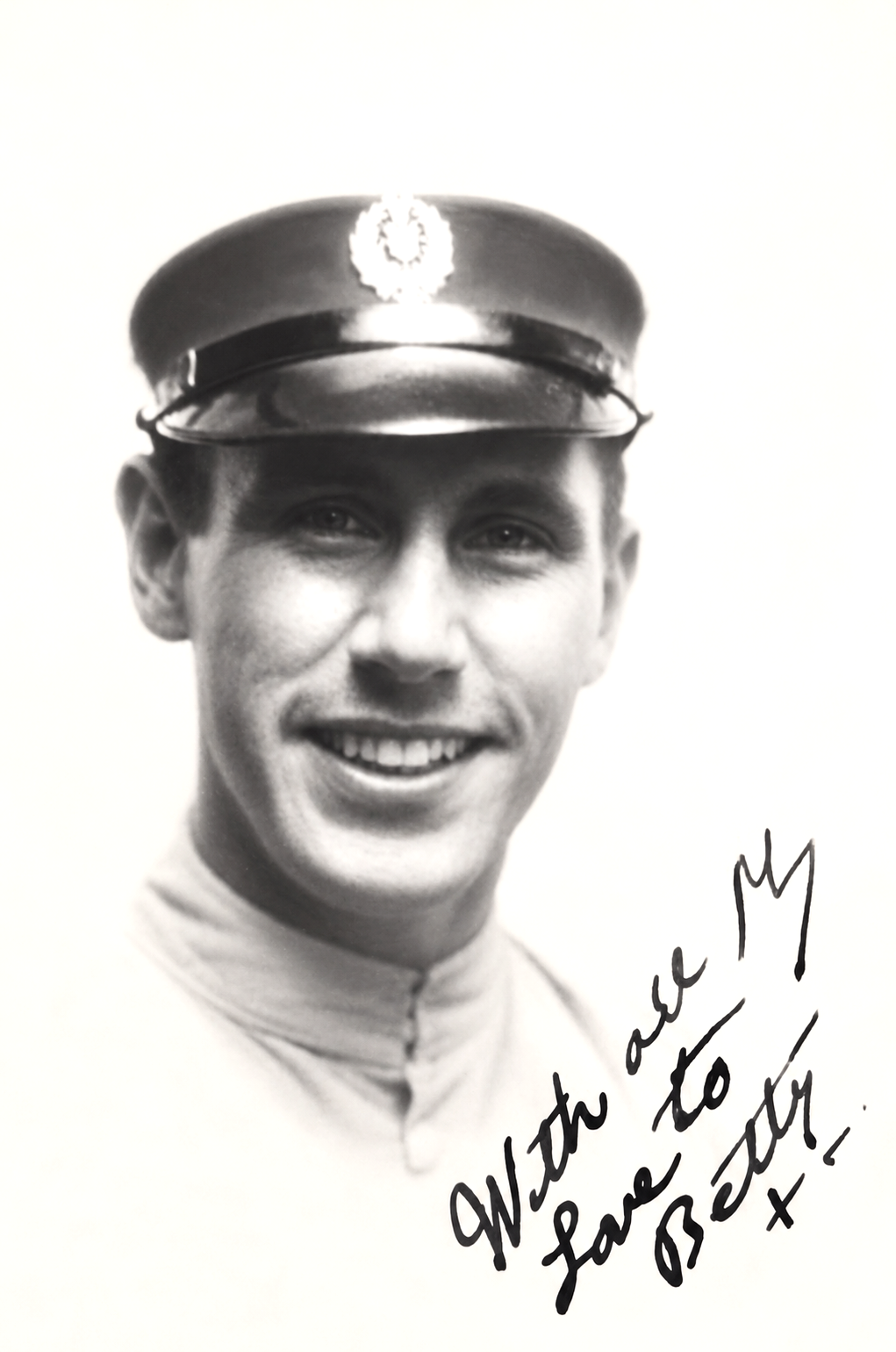
Corporal Robert Henry Seddon, PLYX1717, Royal Marines — swam ashore on Banka Island and became an eyewitness to the massacre of nurses, civilians, and servicemen on Radji Beach — was born on 28 August 1918.
He recorded that between 60 and 70 personnel had been aboard the HMS Yin Ping, the ship on which he evacuated from Singapore, when it was sunk by shellfire from a Japanese cruiser at approximately 1700 hours the previous day, and that at the time he believed himself to be the sole survivor.
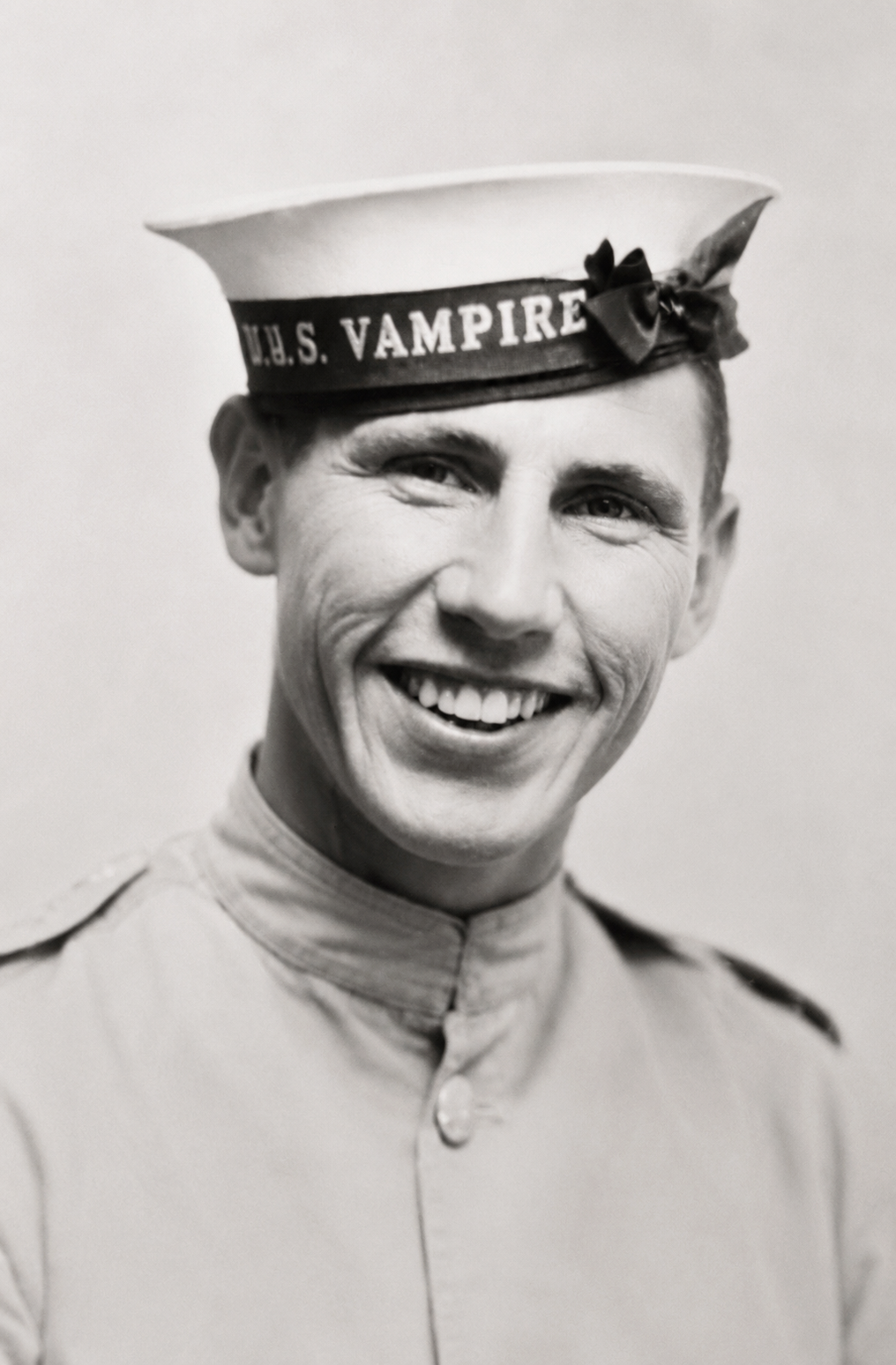
While swimming ashore in a life jacket on 16 February 1942, Seddon witnessed the atrocities unfolding on Radji Beach. In his affidavit, now held in the Australian National Archives in Melbourne, he described seeing men and women being shot and bayoneted: “...a few did attempt to rush into the water but they were shot and killed before they were able to swim out of range...”.
He stated that he himself was washed ashore shortly afterwards and pretended to be dead. The same Japanese patrol responsible for the killings searched him and kicked him several times, but evidently assumed he was dead and left him where he lay.
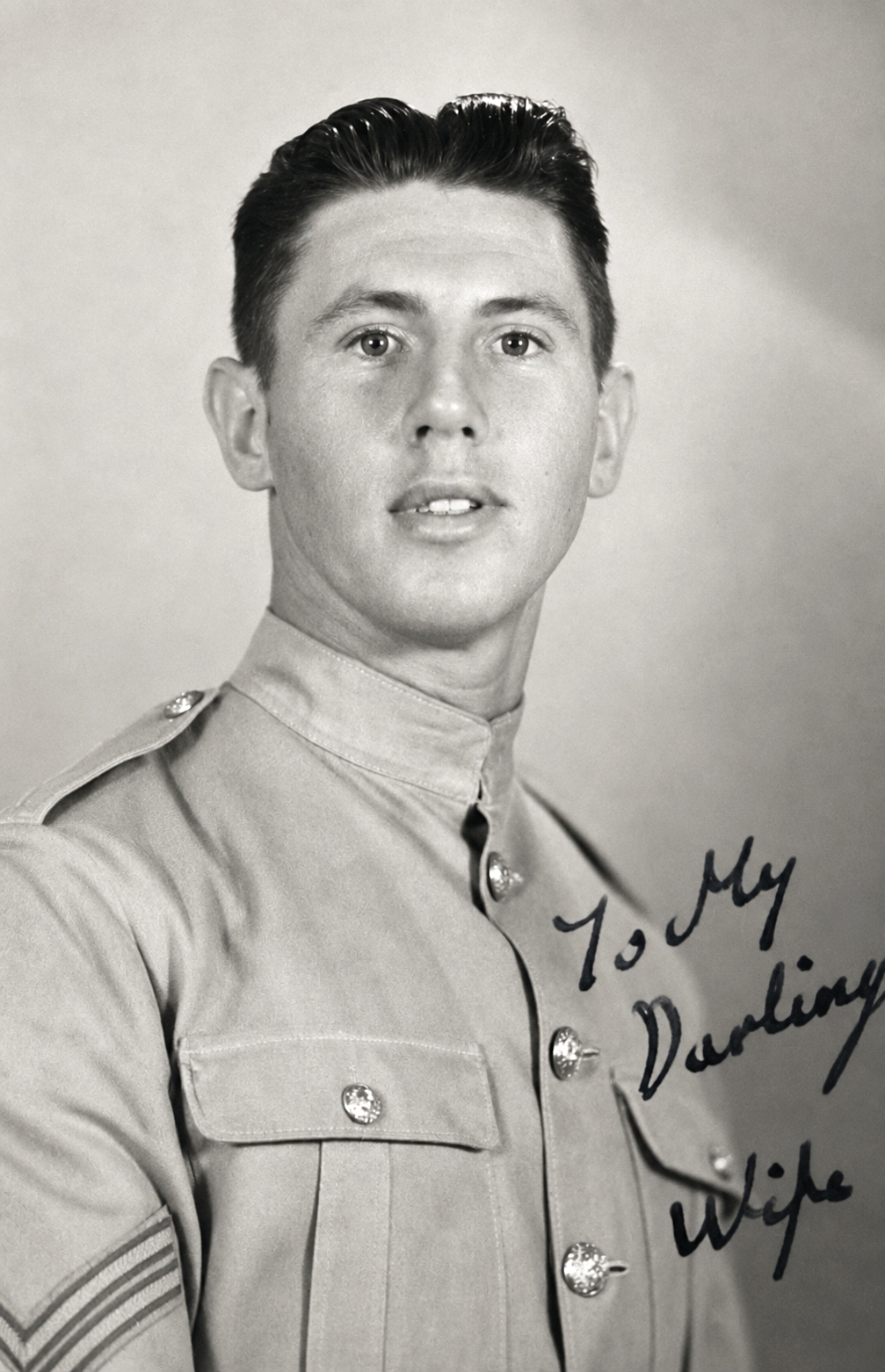
After spending the night concealed in the jungle near the beach, he walked along the shoreline the following morning and later recalled:
“…I searched around and found the bodies of 15 New Zealand and Australian Nursing Sisters, 15 British service personnel and 5 merchant seamen (presumably members of the crew). I walked further along the beach and found 2 more lifeboats grounded and nearby the bodies of 7 R.N. personnel. The latter included two officers and the whole party appeared to have been shot and bayoneted …”.
Seddon was captured on 19 February 1942 and became a prisoner of war at Muntok and later at Palembang. He survived captivity and eventually returned to the United Kingdom.
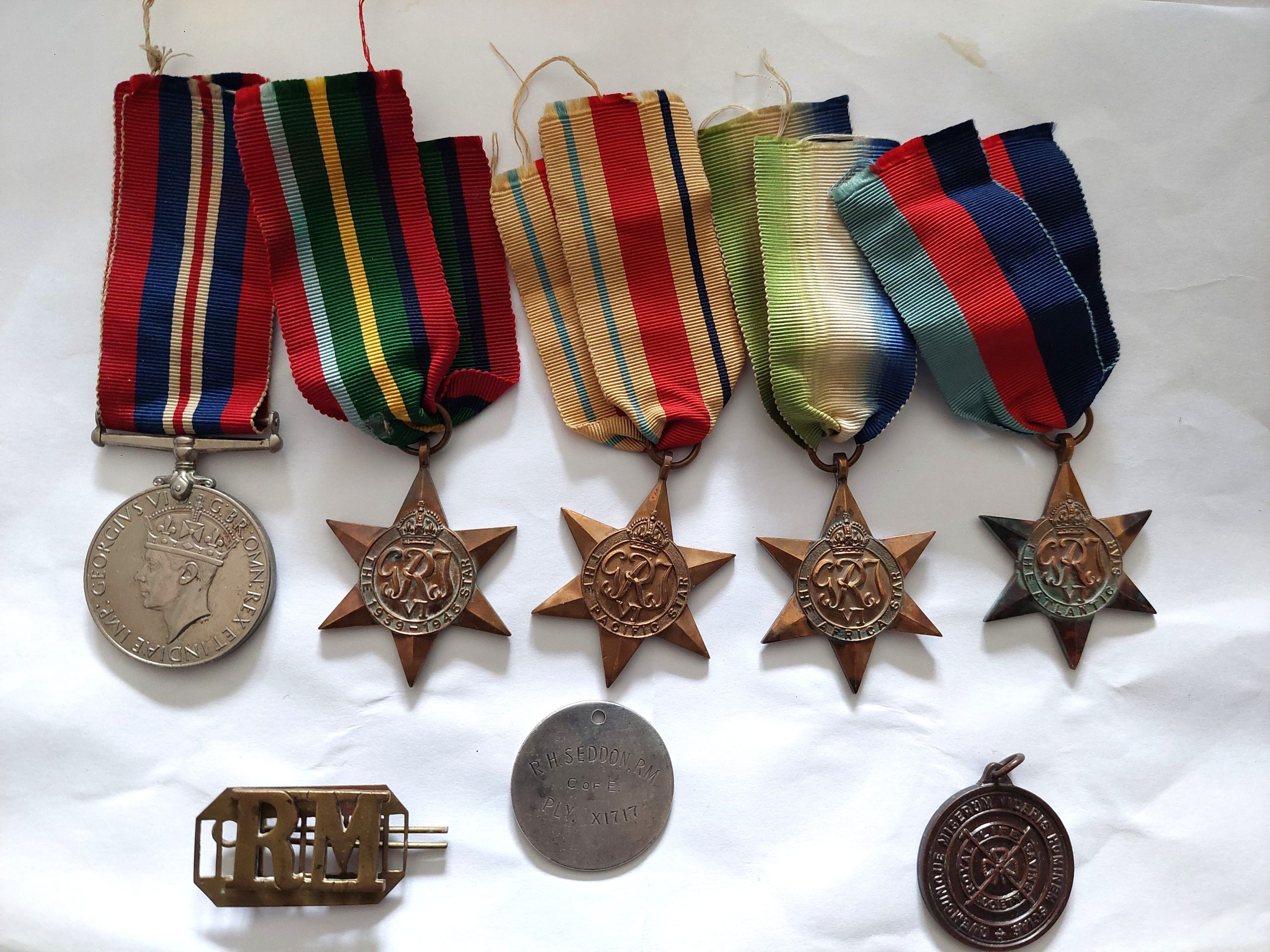
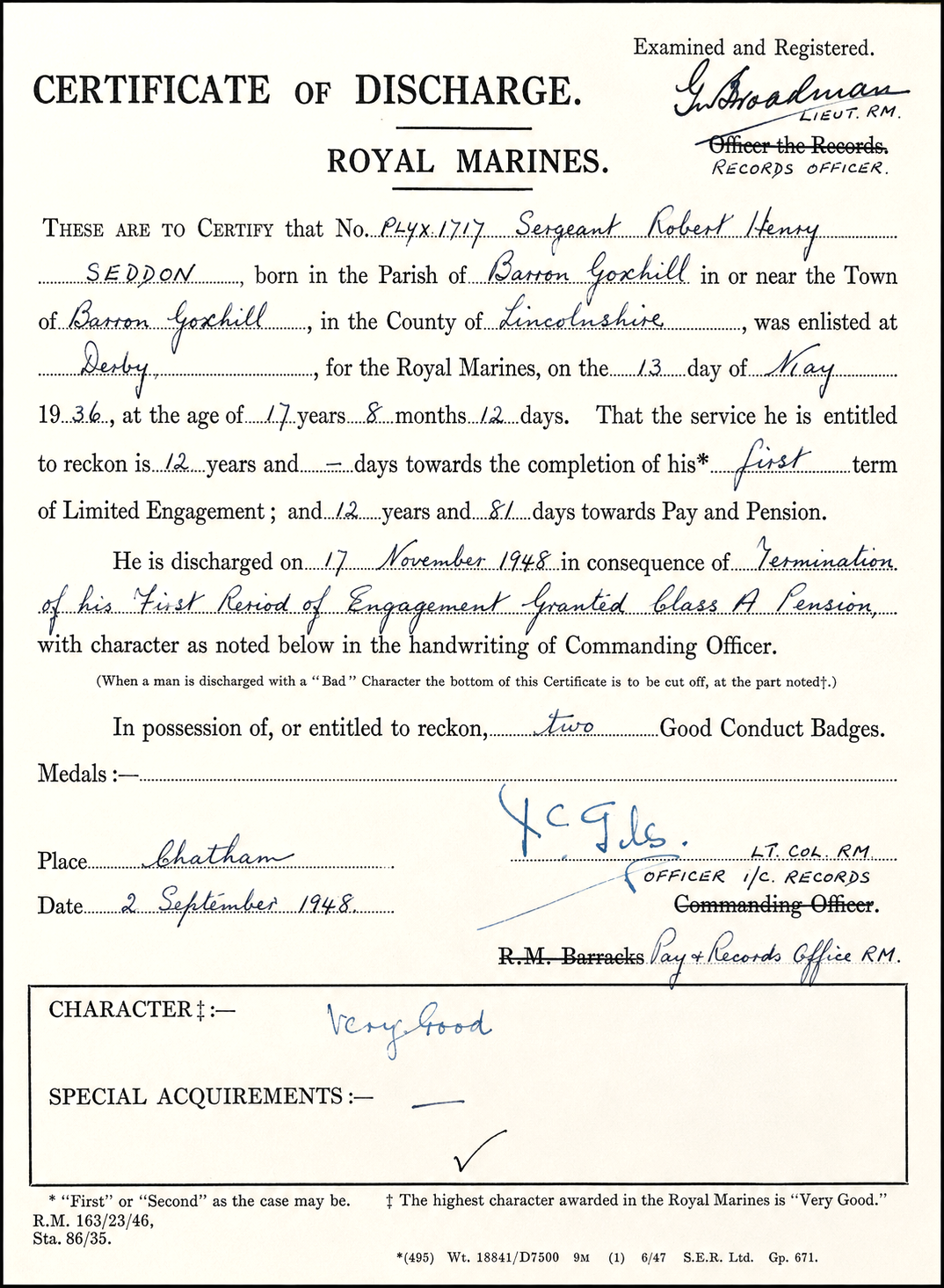
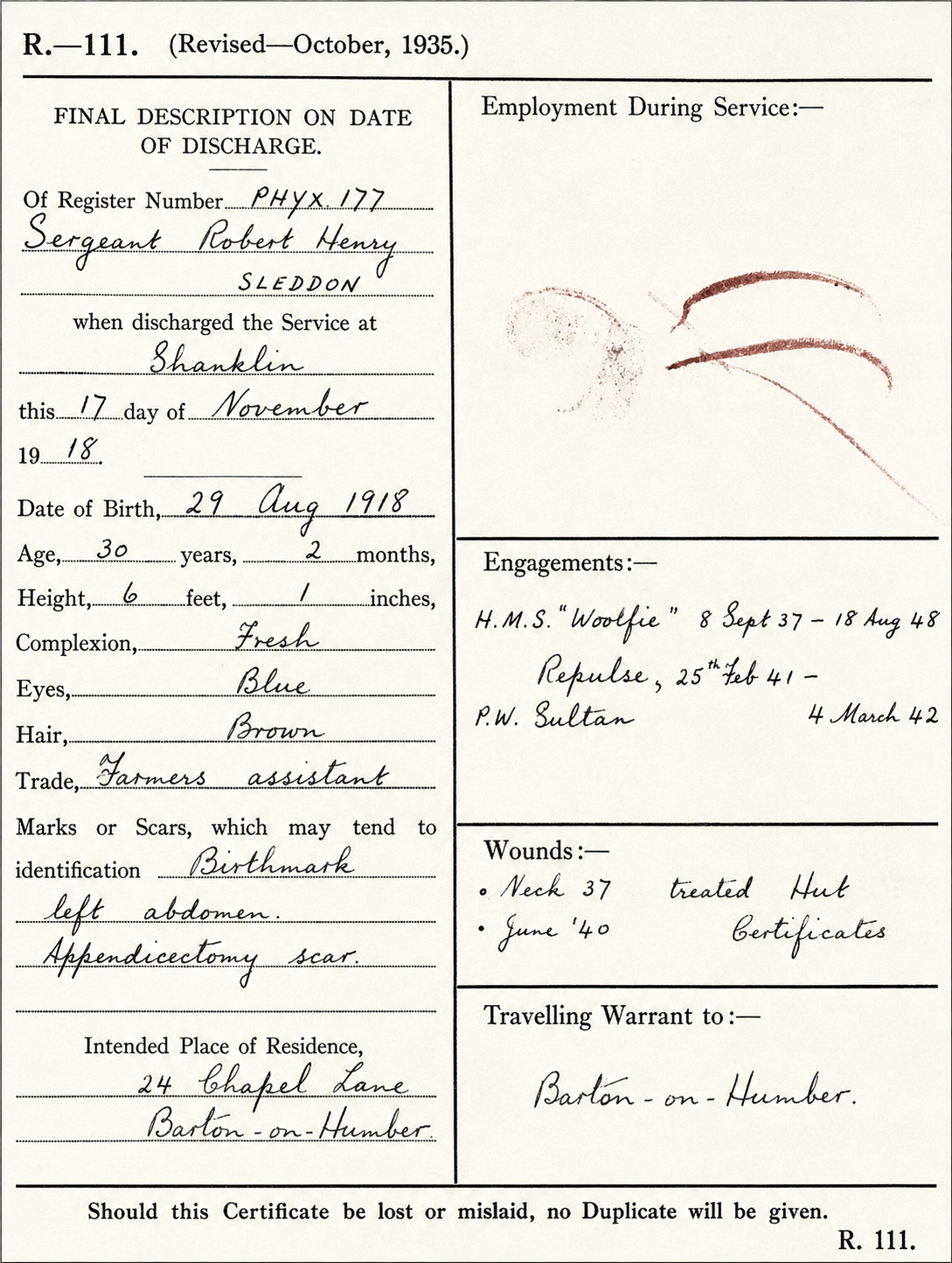
He left the Marines in 1948. His discharge certificate can be viewed here. He joined the Police Force in Goole for over two years. He also worked with a group of builders on some of the bombed properties in the area in his free time. Later he started a construction company building local government assets, roads, and plant hire. He had 5 more Children with his first wife Elizabeth and 3 with his second wife Mavis. He passed away in 2003.
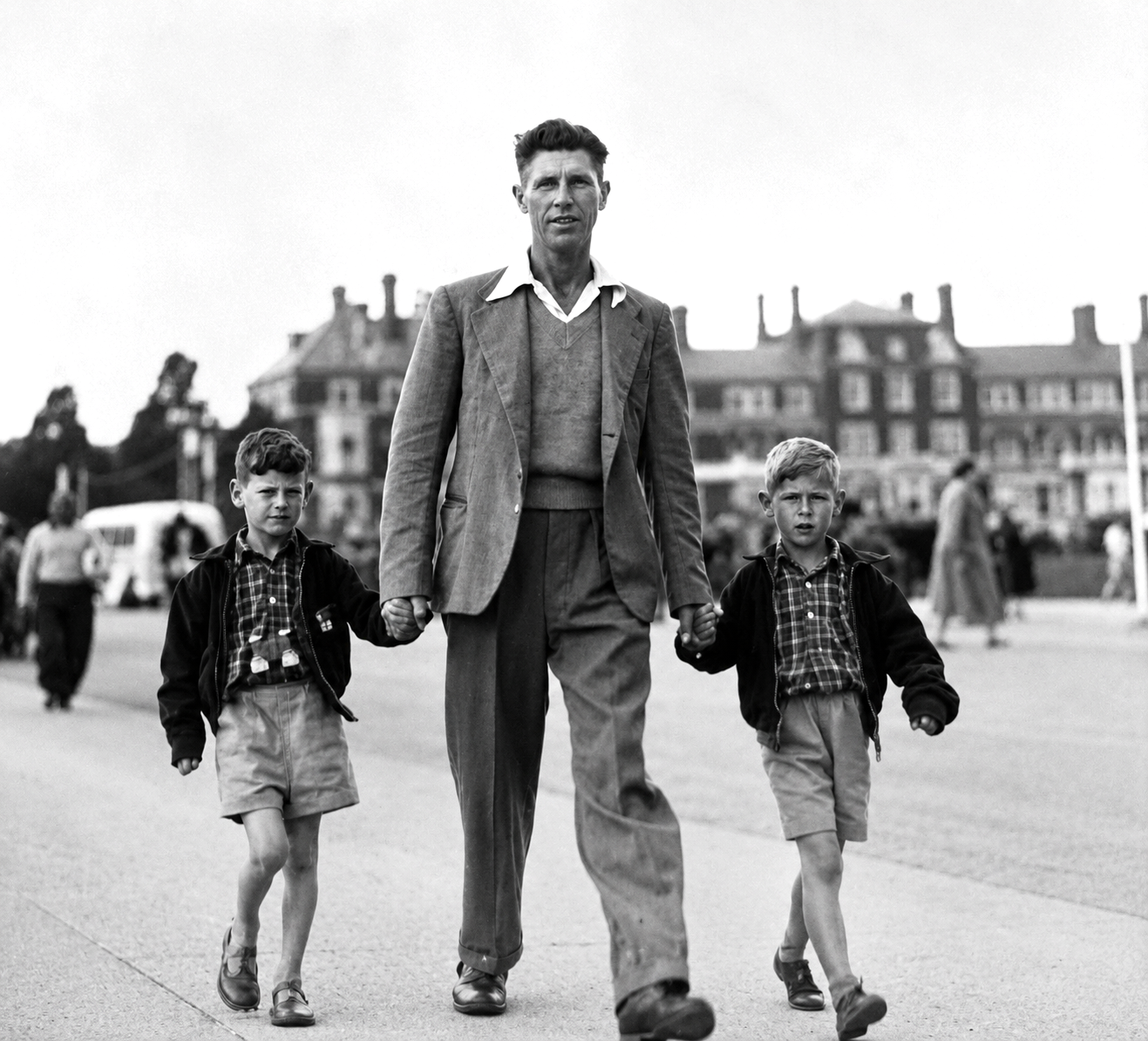
Articles about Robert Seddon appeared in a number of newspapers, some of which can be viewed here in PDF and others are below.
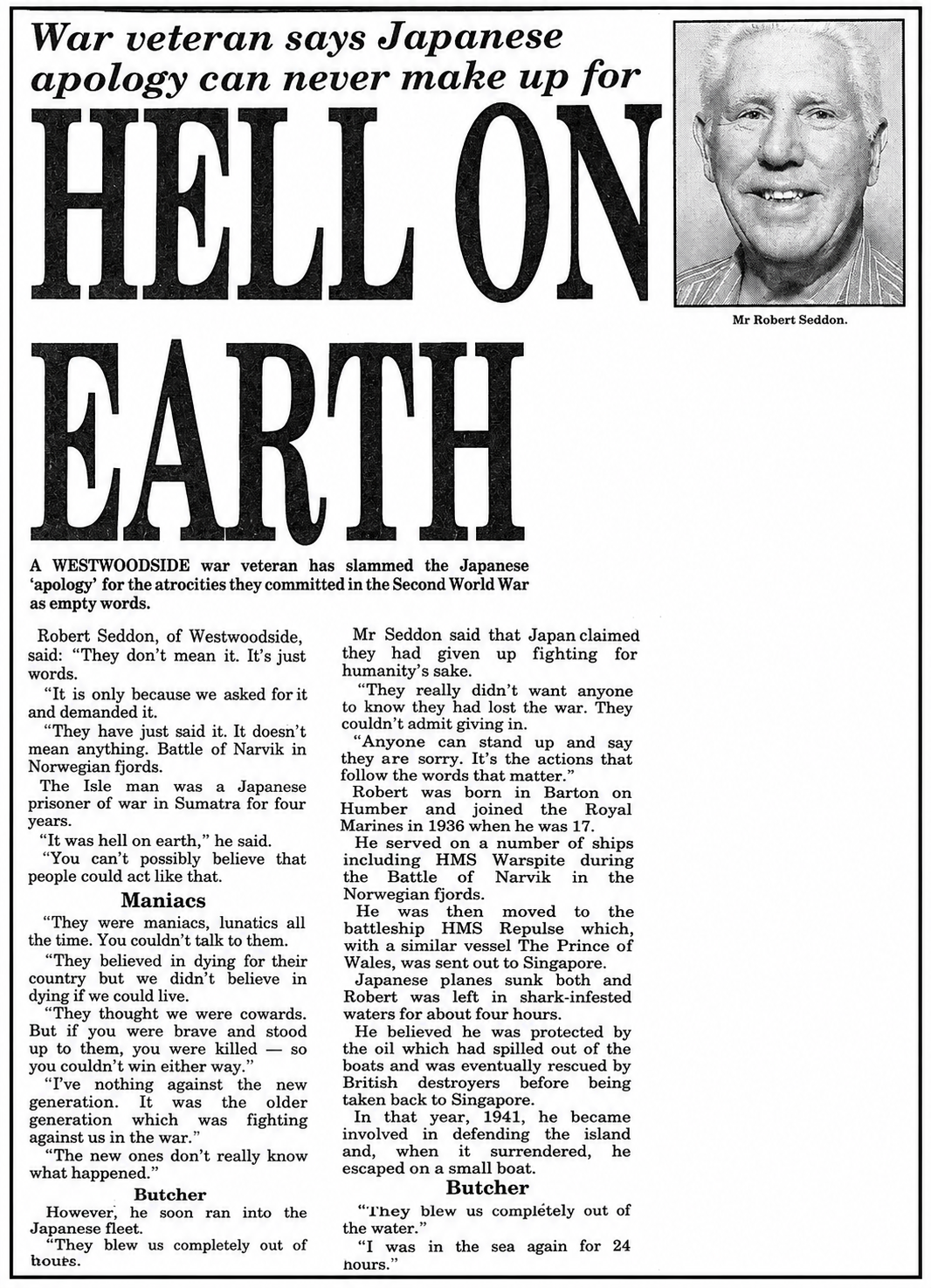
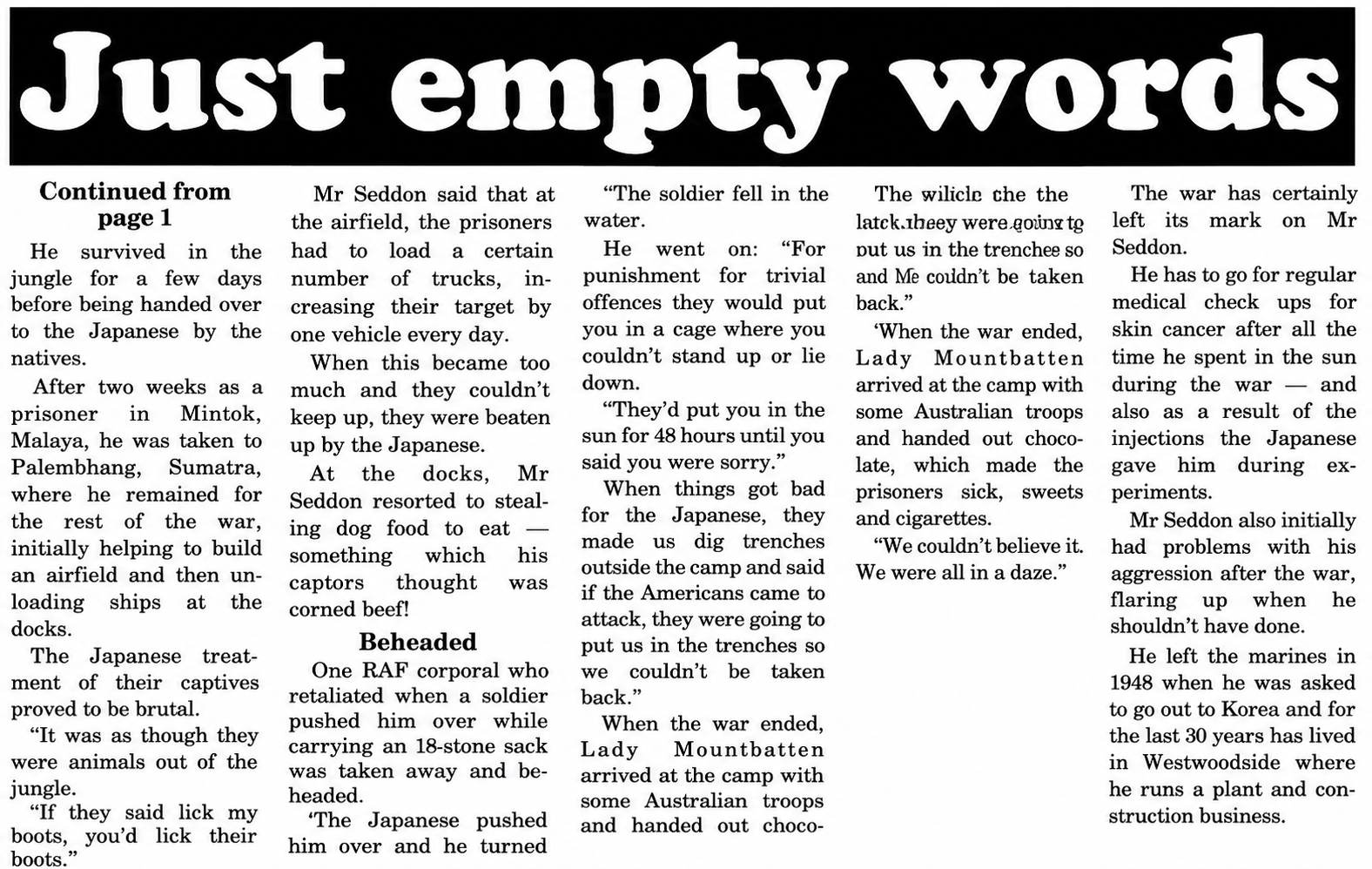
War veteran says Japanese apology can never make up for
HELL ON EARTH
Mr Robert Seddon.
A WESTWOODSIDE war veteran has slammed the Japanese ‘apology’ for the atrocities they committed in the Second World War as empty words.
War veteran says Japanese apology can never make up for
A WESTWOODSIDE war veteran has slammed the Japanese ‘apology’ for the atrocities they committed in the Second World War as empty words.
Robert Seddon, of Westwoodside, said: “They don’t mean it. It’s just words. “It is only because we asked for it and demanded it. “They have just said it. It doesn’t mean anything.
The Isle man was a Japanese prisoner of war in Sumatra for four years. “It was hell on earth,” he said. “You can’t possibly believe that people could act like that.
Maniacs
“They were maniacs, lunatics all the time. You couldn’t talk to them. “They believed in dying for their country but we didn’t believe in dying if we could live.
“They thought we were cowards. But if you were brave and stood up to them, you were killed – so you couldn’t win either way.”
“I’ve nothing against the new generation. It was the older generation which was fighting against us in the war.”
“The new ones don’t really know what happened.”
Mr Seddon said that Japan claimed they had given up fighting for humanity’s sake. “They really didn’t want anyone to know they had lost the war. They couldn’t admit giving in. “Anyone can stand up and say they are sorry. It’s the actions that follow the words that matter.”
Robert was born in Barton on Humber and joined the Royal Marines in 1936 when he was 17.
He served on a number of ships including HMS Warspite during the Battle of Narvik in the Norwegian fjords.
He was then moved to the battleship HMS Repulse which, with a similar vessel The Prince of Wales, was sent out to Singapore. Japanese planes sunk both and Robert was left in shark-infested waters for about four hours.
He believed he was protected by the oil which had spilled out of the boats and was eventually rescued by British destroyers before being taken back to Singapore. In that year, 1941, he became involved in defending the island and, when it surrendered, he escaped on a small boat.
Butcher
However, he soon ran into the Japanese fleet.
“They blew us completely out of the water hours. “I was in the sea again for 24 hours
He drifted along by clinging on to a piece of wood and finally made it to the Malayasian island of Banka where he witnessed the Japanese butcher a group of New Zealand nurses who had also been shipwrecked.
He survived in the jungle for a few days before being handed over to the Japanese by the natives.
After two weeks as a prisoner in Mintok, Malaya, he was taken to Palembhang, Sumatra, where he remained for the rest of the war, initially helping to build an airfield and then unloading ships at the docks.
The Japanese treatment of their captives proved to be brutal. “It was as though they were animals out of the jungle. “If they said lick my boots, you’d lick their boots.”
Mr Seddon said that at the airfield, the prisoners had to load a certain number of trucks, increasing their target by one vehicle every day.
When this became too much and they couldn’t keep up, they were beaten up by the Japanese.
At the docks, Mr Seddon resorted to stealing dog food to eat – which his captors thought corned beef!
Beheaded
One RAF corporal who retaliated when a soldier pushed him over while carrying an 18-stone sack was taken away and be-headed. ‘The Japanese pushed him over and he turned round and he hit him back.’ Said Mr Seddon.
“The soldier fell in the water. He went on: ” For punishment for trivial offences they would put you in a cage where you couldn’t stand up or lie down. “They’d put you in the sun for 48 hours until you said you were sorry.”
When things got bad for the Japanese, they made us dig trenches outside the camp and said if the Americans came to attack, they were going to put us in the trenches so we couldn’t be taken back.”
When the war ended, Lady Mountbatten arrived at the camp with some Australian troops and handed out chocolate, which made the prisoners sick, sweets and cigarettes. “We couldn’t believe it. We were all in a daze.
The war has certainly left its mark on Mr Seddon.
He has to go for regular medical check ups for skin cancer after all the time he spent in the sun during the war – and also as a result of the injections the Japanese gave him during experiments.
Mr Seddon also initially had problems with his aggression after the war, flaring up when he shouldn’t have done.
He left the marines in 1948 when he was asked to go out to Korea and for the last 30 years has lived in Westwoodside where he runs a plant and construction business.
Below, Seddon’s Certificate of Service.
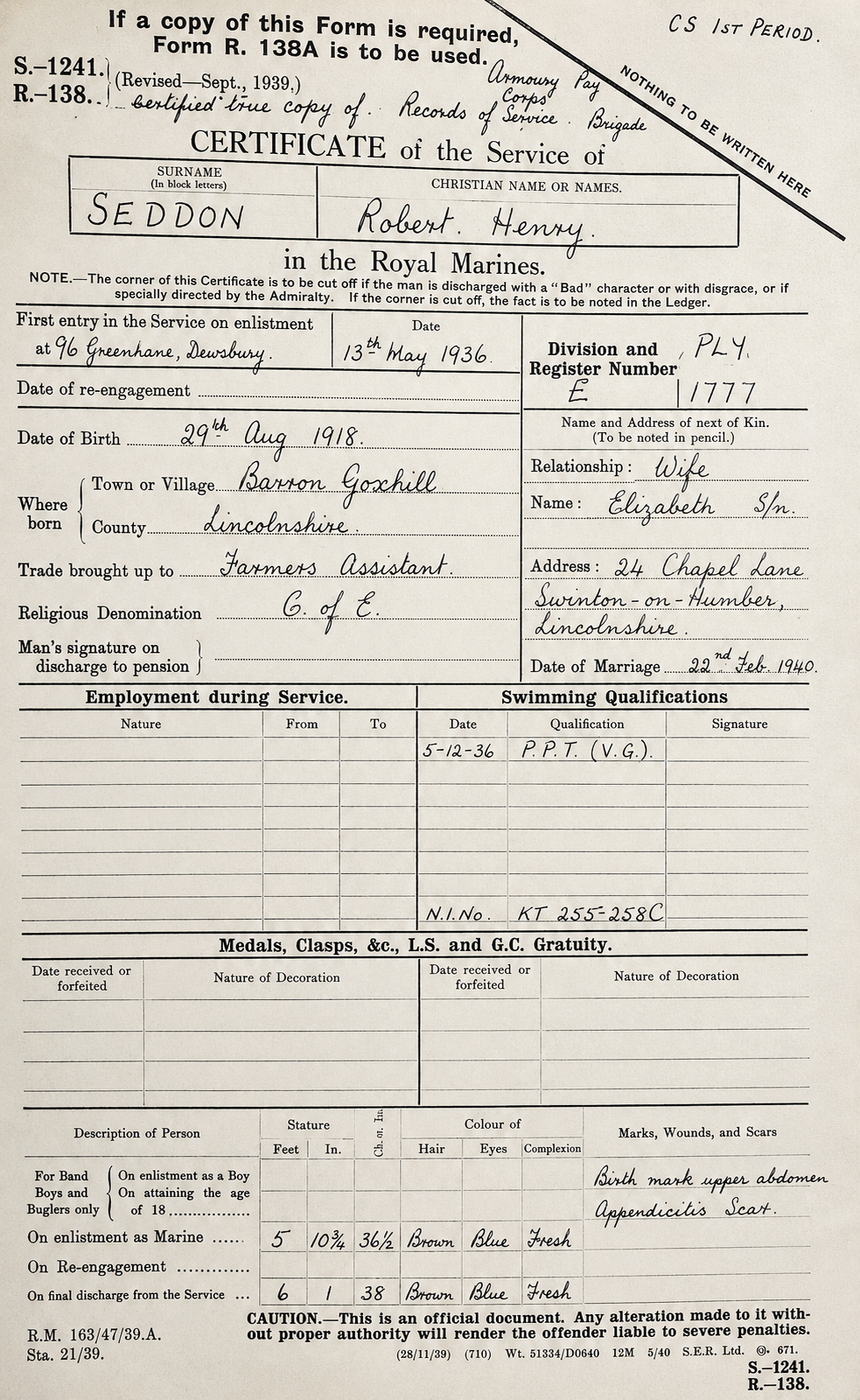
Seddon’s Certificate of Discharge from the Royal Marines: